AAC Blocks vs Indian Clay Bricks: Which is Better for Modern Construction?
When it comes to building a strong, durable, and efficient structure, choosing the right walling material is one of the most important decisions. In India, clay bricks have been used for centuries and are deeply rooted in traditional construction. However, in recent years, AAC blocks (Autoclaved Aerated Concrete) have become increasingly popular due to their modern technology, lightweight nature, and eco-friendly properties.
Er. Sahil Dogra
10/20/20252 min read
1. What Are AAC Blocks?
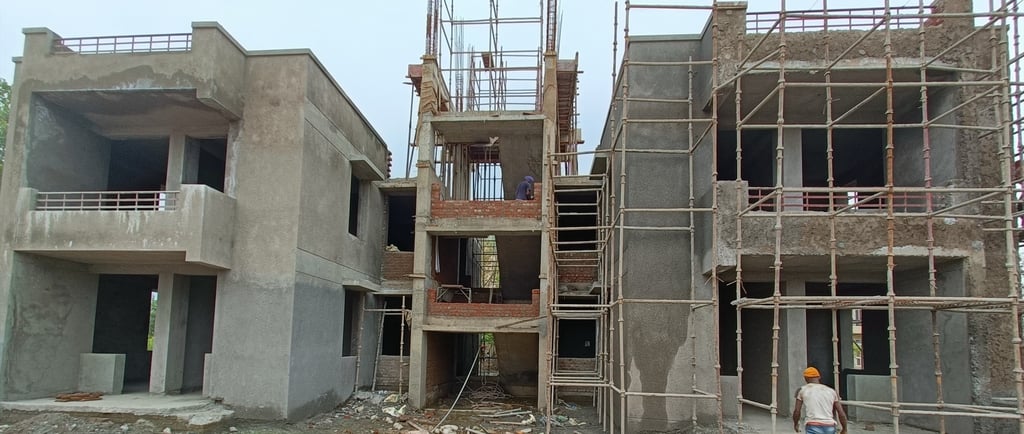
AAC (Autoclaved Aerated Concrete) blocks are lightweight, precast foam concrete building materials made from a mixture of cement, lime, fly ash, water, and a small amount of aluminum powder.
When the mixture reacts, tiny air bubbles are formed, giving AAC its characteristic light weight and thermal insulation properties. These blocks are then cured under heat and pressure in an autoclave — hence the name.
Key Features of AAC Blocks:
Extremely lightweight (almost one-third the weight of traditional bricks).
Excellent thermal and sound insulation.
Fire-resistant and pest-proof.
Uniform in shape and size, reducing the need for plastering.
Made using fly ash — an industrial waste — making them eco-friendly.
2. What Are Indian Clay Bricks?
Clay bricks are the traditional building blocks of India, made by molding clay into shape and then baking it in a kiln. They are strong, durable, and time-tested — which is why most old and modern houses still use them.
Key Features of Clay Bricks:
High compressive strength and long-lasting performance.
Easily available and widely used.
Good sound insulation and heat resistance.
Can absorb moisture, helping to maintain a balanced indoor climate.
However, the production of clay bricks involves the burning of topsoil and firewood or coal, which has environmental drawbacks.
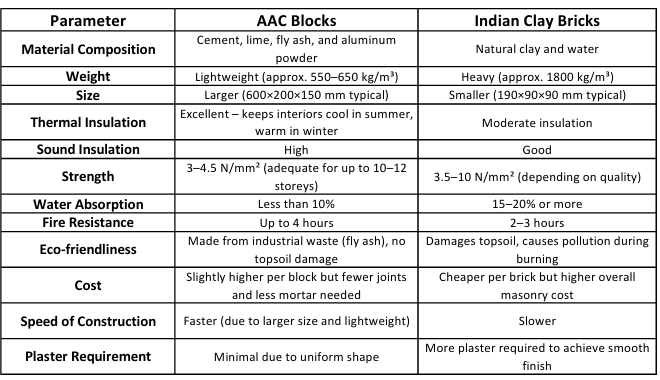
3. AAC Blocks vs Clay Bricks: A Detailed Comparison
4. Advantages of AAC Blocks
Lightweight: Reduces dead load on the structure, allowing smaller foundation sizes and saving costs.
Energy Efficient: Offers excellent thermal insulation, reducing electricity bills for heating or cooling.
Eco-Friendly: Uses fly ash and minimal natural resources, supporting green construction practices.
Faster Construction: Larger size and easy handling mean fewer joints and faster wall completion.
Fire Resistant: Safe for both residential and commercial buildings.
5. Advantages of Clay Bricks
Traditional and Trusted: A proven material that has stood the test of time.
Easily Available: Readily available in almost every part of India.
Strong and Durable: Can last for generations when built properly.
Good Workability: Easy for masons to use due to its smaller size and traditional method.
6. Which One Should You Choose?
Your choice between AAC blocks and clay bricks depends on your project type, budget, and location.
If you are building a modern home, apartment, or commercial building, and value energy efficiency, speed, and eco-friendliness, AAC blocks are an excellent choice.
But if you’re working on a small-scale project, rural construction, or areas with limited access to AAC block suppliers, clay bricks can still be a reliable and economical option.
In many modern projects, builders now prefer AAC blocks because they align with India’s push toward sustainable and green construction. Over time, the slightly higher material cost is balanced by savings in mortar, plaster, and energy.
7. Conclusion
Both AAC blocks and Indian clay bricks have their own strengths and applications.
Clay bricks have been the backbone of Indian construction for centuries, offering reliability and strength. But AAC blocks represent the future — lightweight, sustainable, and efficient, meeting the demands of modern architecture and environmental responsibility.
In the end, the best choice is the one that fits your project’s structural needs, location, and long-term goals. As construction in India evolves, AAC blocks are steadily becoming the go-to material for the next generation of sustainable buildings.